
Key Takeaways
- Direct primary care (DPC) is a common-sense alternative to the traditional healthcare system, promoting price transparency and flat-rate membership rather than fee-for-service billing.
- Membership fees cover primary care services like checkups, annual well visits and sick visits with no surprise bills or expensive co-pays.
- DPC providers have smaller patient panels, allowing genuine patient-provider relationships and higher-quality, personalized care focused on prevention rather than reactive treatment.
How the DPC Model Works
Traditional healthcare features rushed appointments, complex billing and high administrative costs to navigate the system—all of which reduce the quality of care. Direct primary care removes the friction, shifting the focus back to the patient-provider relationship and better health outcomes.
Membership Not Fee-for-Service
Instead of billing insurance or health plans for every individual service, the direct primary care model operates on an affordable, flat-rate monthly membership. DPC membership typically covers all or most primary care services, such as sick visits, annual wellness exams, office visits, preventive screenings, and other preventive services.
The Provider-Patient Relationship
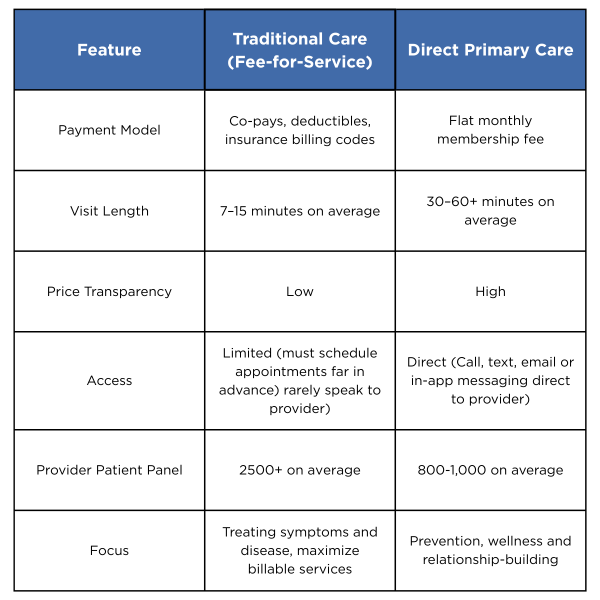
In the DPC model, providers typically manage much smaller patient panels—often fewer than half the 2,500-patient average. Reducing quantity improves quality. With fewer patients, DPC providers can develop genuine relationships with members, focusing on managing complex, chronic conditions and providing direct access via text, email, call or video. Restoring the patient-provider relationship leads to proactive, holistic care and better health outcomes.
DPC vs. Traditional Insurance-Based Care
Direct primary care is an entirely different experience for members and health plan administrators. Below is a table highlighting the key differences between DPC and traditional insurance networks:
Why Texas Employers and Brokers Are Switching to DPC
For self-funded employers, DPC is a game-changing benefit that can reduce healthcare costs drastically while increasing employee wellness.
Lowering the Net Cost of Care
The most significant impact DPC has on self-funded plans is the cost of downstream claims. By providing unlimited, immediate access to a primary care provider (PCP), direct primary care delivers preventive, simple care long before conditions escalate to high-cost events. PCPs can proactively manage diabetes, hypertension and urgent care needs before they become emergent. Accessible, affordable and proactive management significantly reduces costly ER visits and urgent care claims, which are major drivers of rising stop-loss rates.
Employee Retention and Wellness
Employees consistently rank accessible and high-quality healthcare as top benefits priorities. When employees can quickly see their PCP, are given extended time and have a strong relationship with their provider, they use their benefits more effectively, leading to lower absenteeism and higher overall wellness.
Common Misconceptions About Direct Primary Care
Is DPC Concierge Medicine?
No, while both models offer direct access, Concierge Medicine usually involves a high-cost retainer fee (often thousands of dollars per year) and still bills insurance for services. Direct Primary Care is designed to be affordable for everyday families and employers, with monthly fees ranging from $70 to $150 per member.
Do I Still Need Insurance with DPC?
Yes, direct primary care bolt-on models cover primary care and preventive care, not catastrophic events. DPC is most effective when paired with a “wrap-around” health insurance product—typically a low-premium, high-deductible health plan (HDHP) or a specialized health-sharing plan. This strategy covers emergencies, hospital stays and specialist visits, while the DPC membership manages 80-90% of a person’s routine health needs.
Conclusion: The Future of Primary Care
Direct Primary Care is growing fast as the necessary shift away from the expensive, volume-driven, fee-for-service healthcare system. By prioritizing the provider-patient relationship and price transparency, DPC delivers tangible savings and direct access to quality healthcare. It represents a fundamental restructuring of primary care that employees love, that saves self-funded employers money and provides brokers with a powerful, competitive tool to grow their business.
Ready to explore the cost-saving potential of DPC for your benefits plan?